



2025-11
05Mass flow? Volume flow?
Introduction
The YIDU flowmeter can measure and display both standard flow rate and operating flow rate simultaneously, which many types of flowmeters cannot achieve. It also plays an important role in practical application scenarios. The terms' mass flow 'and' volume flow 'are often mentioned in the industry, and some users may not be able to distinguish between these terms. This article will take you to explore the difference.
What is traffic
The amount of fluid flowing through a cross-section per unit time is called "flow rate". The most basic physical quantities of a fluid are volume and mass, so the unit of flow should be the ratio of volume or mass to time, such as mL/min, L/min, m ³/h, g/s, etc. These units are called volumetric flow and mass flow , respectively.
What are working conditions and standard conditions
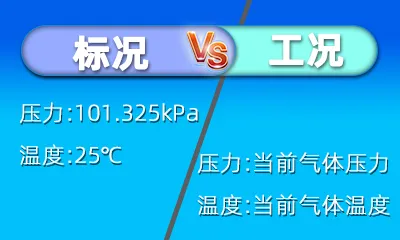
When it comes to gases, there are two major factors that affect their volume: pressure and temperature. When a certain amount of gas changes pressure and temperature, its volume also changes accordingly. The gas environment determined by pressure and temperature is called the operating condition, and the gas flow rate measured under this condition is called the operating condition flow rate.
However, customers often need to know the mass flow rate of the gas, and the operating conditions are constantly changing, which is not conducive to calculating accurate mass flow rates.
To address this issue, we need a standard under which gas calculations are performed. This standard is: a pressure of one standard atmosphere (101.325 kPa), and the temperature may vary depending on the industry and enterprise. The standard temperature for ease of measurement is 25℃. This standard condition is referred to as standard condition, and the gas flow measured under this condition is called standard condition flow rate.
Advantages of standard conditions
What are the advantages of standard traffic compared to operational traffic?
Because the pressure and temperature are determined, the density and other physical parameters of the gas are also determined. Therefore, knowing the gas volume can accurately calculate the gas mass. Therefore, the standard flow rate is habitually referred to as mass flow rate in the industry, and correspondingly, the operating flow rate is also referred to as volume flow rate.
Why display operating conditions
Since users are concerned about standard flow rate, why does the YIDU flowmeter also display operating flow rate?

Working condition effect
The operating flow rate is not meaningless. In some special application scenarios, what users need is exactly the operating flow rate. For example, in the environmental protection industry, atmospheric sampling requires the volume of the atmospheric environment. At this time, the flow measurement function of the YIDU flowmeter becomes very important.